Quantum Light, Human Vision & Single Photons with Wolfgang Löffler
Prof. Wolfgang Löffler from Leiden University explores the interaction between light and matter at the quantum level—with a surprising application: can humans consciously perceive a single photon?
In this episode
- What Wolfgang’s group at the Leiden Institute of Physics studies: how light and matter interact at the quantum level, using single photons and quantum dots
- Whether humans can consciously see a single photon, and why his group is testing it with cognitive neuroscientists
- Why his group works with the same kind of quantum dots as the QuanTour source, and why teaming up with other groups for samples gives the best devices
- His path along the Rhine from Ludwigshafen and Karlsruhe to Leiden, where helium was first liquefied
- The experiment he picked: turning single photons back into classical, laser-like light using a beam splitter and a few mirrors
- Why teaching and outreach matter to him, and his wishes: more time, secure funding, and more and better single photons
Key Takeaways
🔬 Quantum Light and Matter Interactions — Exploring fundamental light-matter interactions and their implications for future quantum technologies.
👁️ Human Vision Experiments — Innovative experiments investigate whether humans can consciously perceive single photons, combining quantum optics with cognitive neuroscience.
⚛️ Applications of Quantum Dots — Quantum dots pave the way for advancements in quantum computing, secure communication, and spectroscopy.
🌍 The QuanTour Project — A collaborative initiative showcasing quantum light sources and cutting-edge technologies across European labs.
🎓 Collaboration in Science — Teamwork and international partnerships are essential to achieving groundbreaking results in fundamental research.
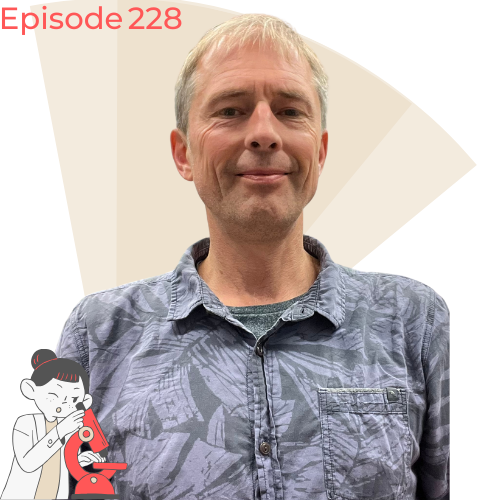


About the guest
Wolfgang Löffler is a Professor at the Leiden Institute of Physics in the Netherlands, researching light and matter at the quantum level with single and entangled photons and quantum dots, with applications from quantum networks to microscopy and the limits of human vision. He studied physics and did his PhD in Karlsruhe, Germany, before moving to Leiden as a postdoc.
Part of Quantum Science & Technology · Quantum dots & quantum light sources
- Chocolate Chips & Relaxed Quantum Dots ft. Armando Rastelli
- Stress enhances quantum dot performance, QuanTour ft. Rinaldo Trotta
- Hot Single Photons for Quantum Communications, QuanTour ft. Carlos Antós Solanas