Quantum Research, Emerging Technologies, and the QuanTour Project with Brian Gerardot
Prof. Brian Gerardot from Heriot-Watt University studies quantum devices and materials—including quantum dots, 2D materials, and silicon carbide. His curiosity-driven research on Moire patterns and optical manipulation of magnetism is shaping the future of quantum technologies.
In this episode
- How Brian’s group designs and makes quantum devices from quantum dots and 2D materials, to study single electrons and photons and how they interact
- What 2D semiconductors are, and how twisting two atomic sheets creates moiré patterns that trap electrons
- Why curiosity-driven research ends up in technology, from the heterostructures in every phone to possible new kinds of transistor
- His path from materials science at Purdue and growing quantum dots at UC Santa Barbara to quantum optics at Heriot-Watt University in Scotland
- The result he picked: making a non-magnetic material magnetic just by changing how many electrons sit in the moiré pattern, and reading it out with light
- His three wishes: a Eureka moment for every PhD student, more technicians and engineers in the lab, and a fairer reward system for papers and grants
Key Takeaways
⚛️ Quantum Device Engineering — Developing quantum devices using materials like quantum dots, 2D materials, and silicon carbide to advance our understanding of quantum interactions.
🔬 Moire Patterns and Magnetism — Innovative techniques use Moire patterns and optical probing to make non-magnetic materials exhibit magnetic properties.
🌌 Emerging Quantum Technologies — Potential applications in quantum computing, communication, and material science from curiosity-driven fundamental research.
🎓 Collaboration and Mentorship — Working with an international, diverse group of students and researchers fosters innovation and creativity.
✨ Curiosity-Driven Research — How fundamental science drives unexpected discoveries, from material interactions to real-world technologies.
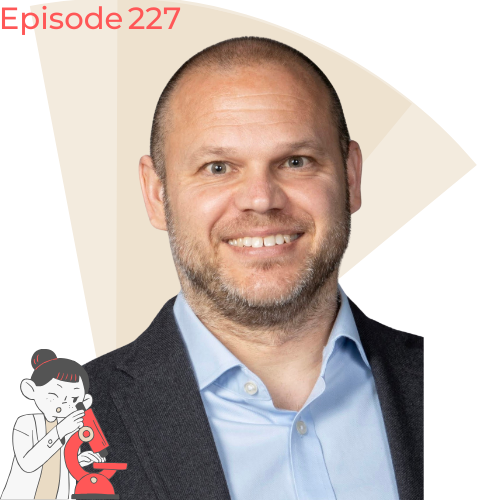


About the guest
Brian Gerardot is a Professor at Heriot-Watt University in Scotland, where his group designs and studies quantum devices made from semiconductor materials, engineering single electrons and photons and the interactions between them. A recent project used a moiré superlattice to show that electrons self-arrange into Wigner crystals, and that magnetism can arise from non-magnetic materials. He studied Materials Engineering at Purdue University and did his PhD at UC Santa Barbara.
Part of Quantum Science & Technology · Quantum dots & quantum light sources
- Chocolate Chips & Relaxed Quantum Dots ft. Armando Rastelli
- Stress enhances quantum dot performance, QuanTour ft. Rinaldo Trotta
- Hot Single Photons for Quantum Communications, QuanTour ft. Carlos Antós Solanas