3D Sculpting with NanoFrazor: Precision at the Nanoscale
Prof. Elisa Riedo from NYU is pioneering NanoFrazor technology — enabling precise 3D sculpting at the atomic level. From diamond-like graphene layers to at-home STI testing, her work spans materials science and health diagnostics.
In this episode
- What Elisa’s lab at New York University studies: the mechanical and electrical properties of nanoscale materials, from graphene to polymers
- How pressing two layers of graphene together can turn them into a single layer of diamond, harder than bulk diamond
- How thermal scanning probe lithography works, a heated tip about 5 nanometres wide that sculpts 3D nanostructures like a pen, and how it grew from an abandoned IBM memory project into the NanoFrazor
- Her path from a small town near Milan, inspired by a book of Albert Einstein’s letters, to Georgia Tech and NYU
- The project she is excited about now: microchips whose transistors each detect a different pathogen, for affordable tests at home, and the startup she co-founded
- Why teamwork is what keeps her in science, and her three wishes: fewer emails and video calls, more face-to-face contact, and a slower pace
Key Takeaways
🔬 Revolutionary NanoFrazor Technology — Enables precise 3D sculpting at the nanoscale, opening new applications in materials science and electronics.
💎 Diamond-Like Graphene Layers — Creating diamond-strong graphene layers with potential applications in protective materials and advanced devices.
🌍 From Italy to NYU — Elisa’s inspiring journey from a small town in Italy to leading a pioneering lab at New York University.
🧬 At-Home STI Testing with Glaucus Technology — Her startup aims to make affordable, at-home STI testing accessible to everyone.
🤝 The Power of Collaboration — Teamwork and collective creativity fuel the scientific breakthroughs in her lab.


About the guest
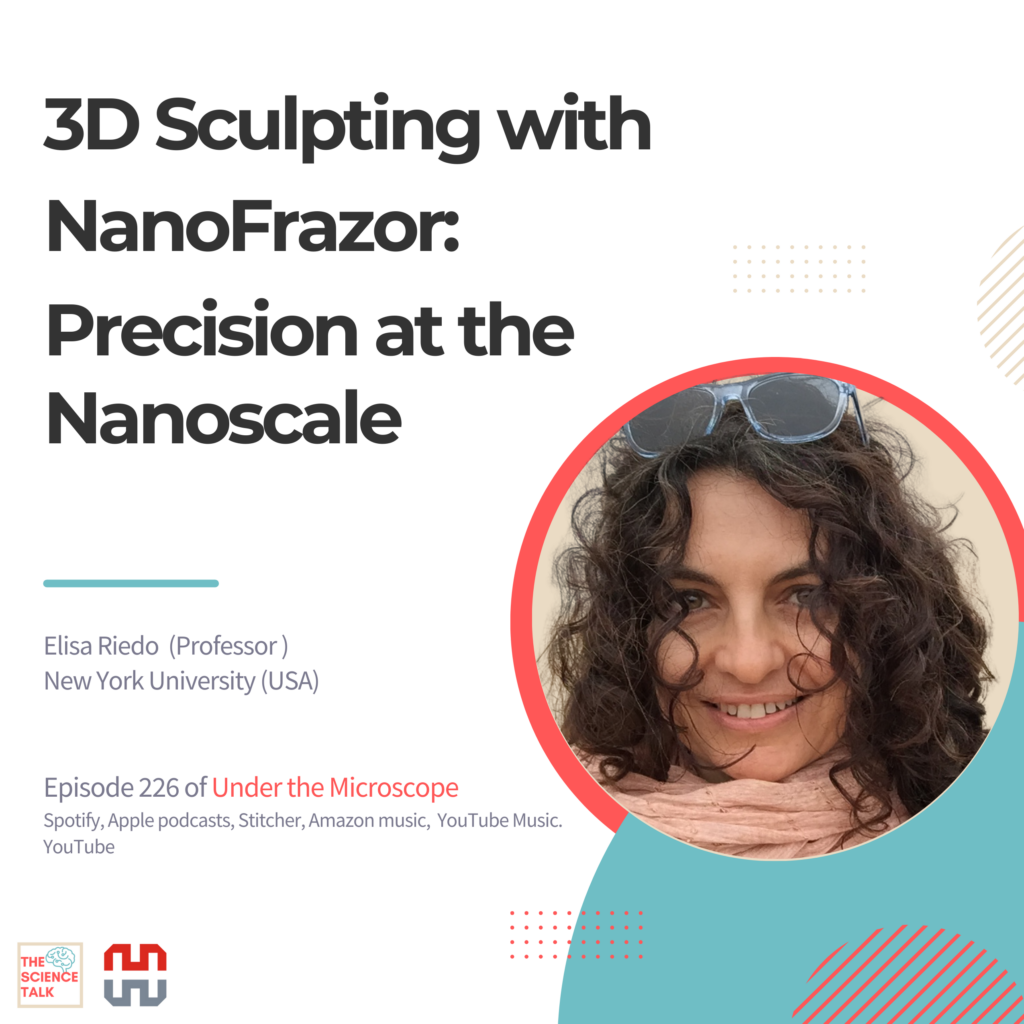
Elisa Riedo is a Professor in the Department of Chemical Engineering at New York University, where she researches nanoscale materials and thermal scanning probe lithography, which creates 3D nanostructures with a heated tip, the technology behind the NanoFrazor. Before NYU, she was a professor at Georgia Tech for 13 years.